
For years, Uganda’s tourism narrative has been anchored in its extraordinary natural offerings, including mountain gorillas, the Nile, vast savannah parks, and rare bird species.
The POATE Cultural Gala signals a maturing of that narrative. By placing Ugandan culture at the center of the expo experience, UTB is making a clear strategic statement: Culture is not a backdrop to Uganda’s tourism offering. It is a destination in itself.
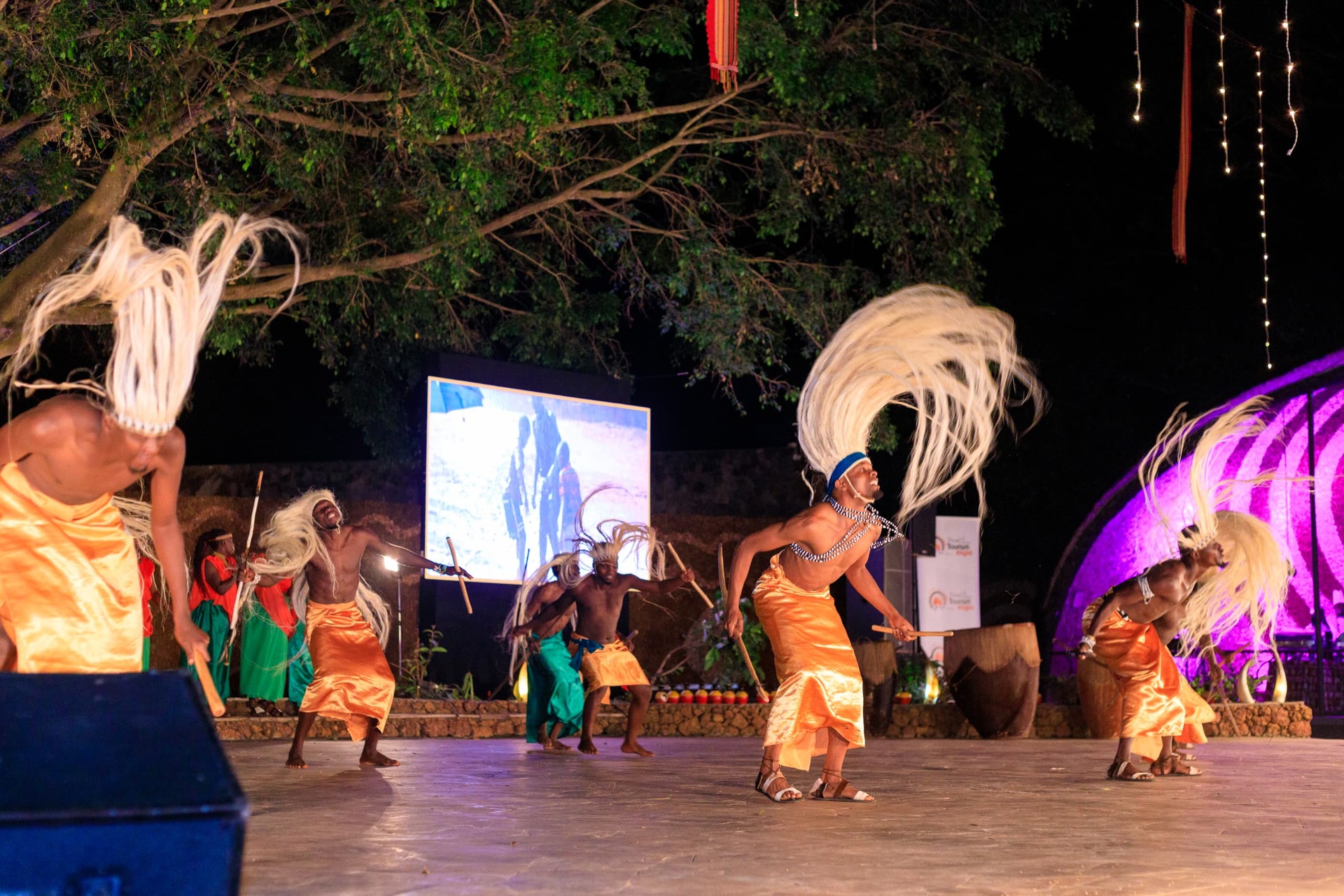
Nestled on nine acres of lush greenery in the heart of Kampala, Ndere Cultural Centre is less a venue and more a living village, with its landscaped gardens, indigenous architecture, and colourful murals setting the stage before a single drum is struck. At its heart is a 700-seat open-air amphitheatre where the renowned Ndere Troupe brings Uganda’s 56 tribes to life through a repertoire of over 40 authentic dances. Uganda Tourism Board chose Ndere deliberately, because no other stage in the country makes the argument for Uganda’s cultural depth quite so powerfully.
The performance moved tribe by tribe, story by story, featuring Bakisimba, Amagunjju, Bwola, Ekitaguriro, Imbalu, Larakaraka, Tamenha ibuga, Orunyege, Adungu, and Amatimbo among others. Between acts, founder and master storyteller Stephen Rwangyezi guided guests through the meaning behind each movement with history, humour, and unmistakable pride. And when the dancing paused, a buffet of matoke, roasted meats, millet bread, and groundnut sauce waited under the open night sky, completing an evening that was equal parts spectacle, scholarship, and celebration.
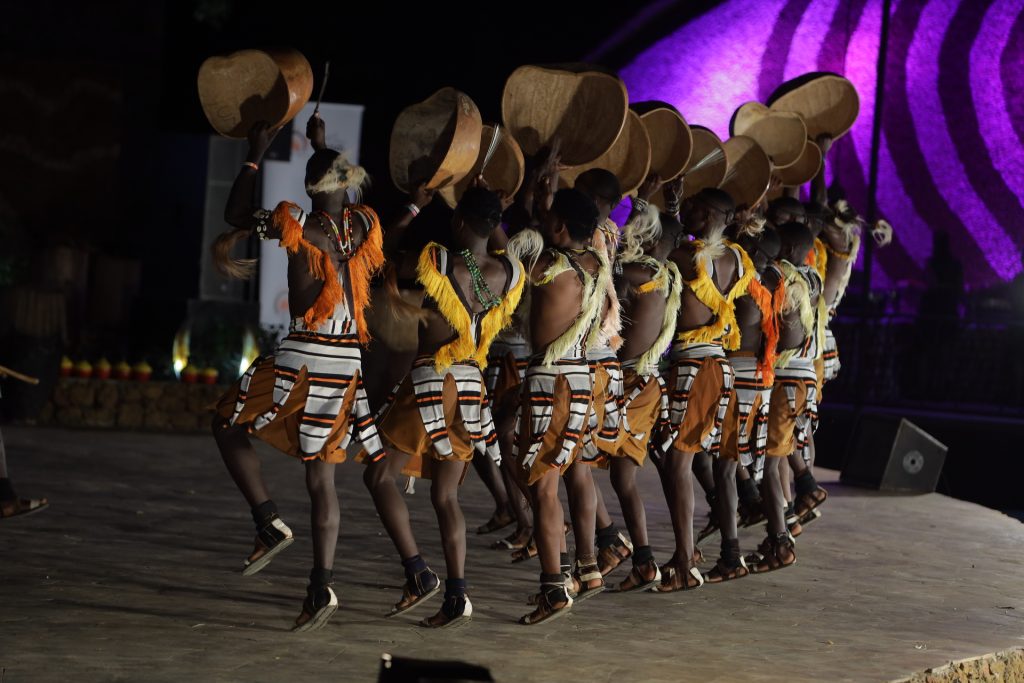
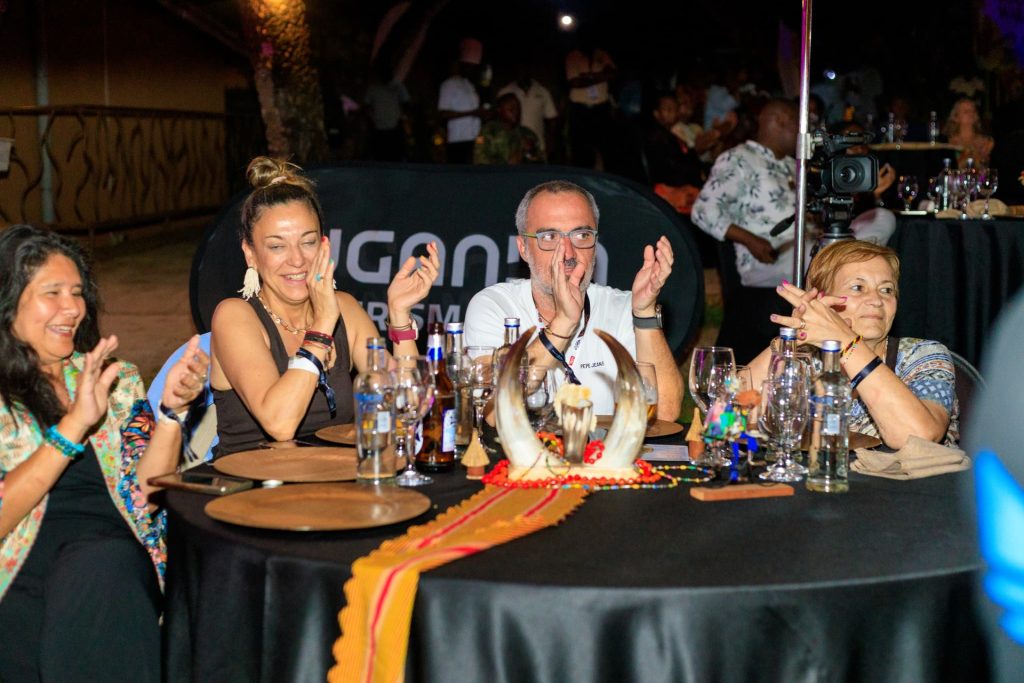
What distinguished the gala as a cultural promotion exercise was its deliberate shift from passive observation to active participation. Guests were not seated at a distance watching performers. They were invited onto the floor, taught traditional dances, and drawn into the cultural conversation. When a travel buyer from Europe learns a dance step from a Ugandan performer, or when a journalist from Asia tastes Kalo for the first time and asks about its origins, a transaction takes place that no brochure or digital campaign can replicate. Culture is transmitted, curiosity is sparked, and Uganda becomes more than a destination. It becomes a story worth telling.
The gala’s feast of authentic Ugandan cuisine extended the cultural promotion beyond performance into something far more personal. What time were the meals? What stood out about food presentation? What time did the event end? Dishes from every region of the country, from the Buganda Kingdom’s beloved Matooke to the hearty Kalo of eastern Uganda, offered guests a regional tour through flavour, anchored in authenticity rather than international familiarity.
UTB Marketing Manager Francis Nyende captured the deeper purpose of the evening. He says,
“Showcasing Uganda’s culture, our music, our food, our dances, to the world is one of the most powerful things we can do as a nation. Our culture is our identity and our pride. When the world sees and celebrates what we have, it fills every Ugandan heart with immense joy and a renewed sense of belonging.”
The guests who attended the gala are among the most influential voices in global travel. Each of them left the Ndere Cultural Centre having experienced Uganda not through a lens, but through their senses, and that is the most powerful form of promotion Uganda could ask for.
As guests stepped into the Kampala night, the city continued where the stage left off. Rooftop bars glowing over the hills, live bands spilling onto the streets, and the vibrant strips of Kololo, Kisementi, and Kabalagala reminding every international visitor that in Uganda, the experience does not end when the curtain falls.
END
Article by: Lynette Agnes Kembabazi