
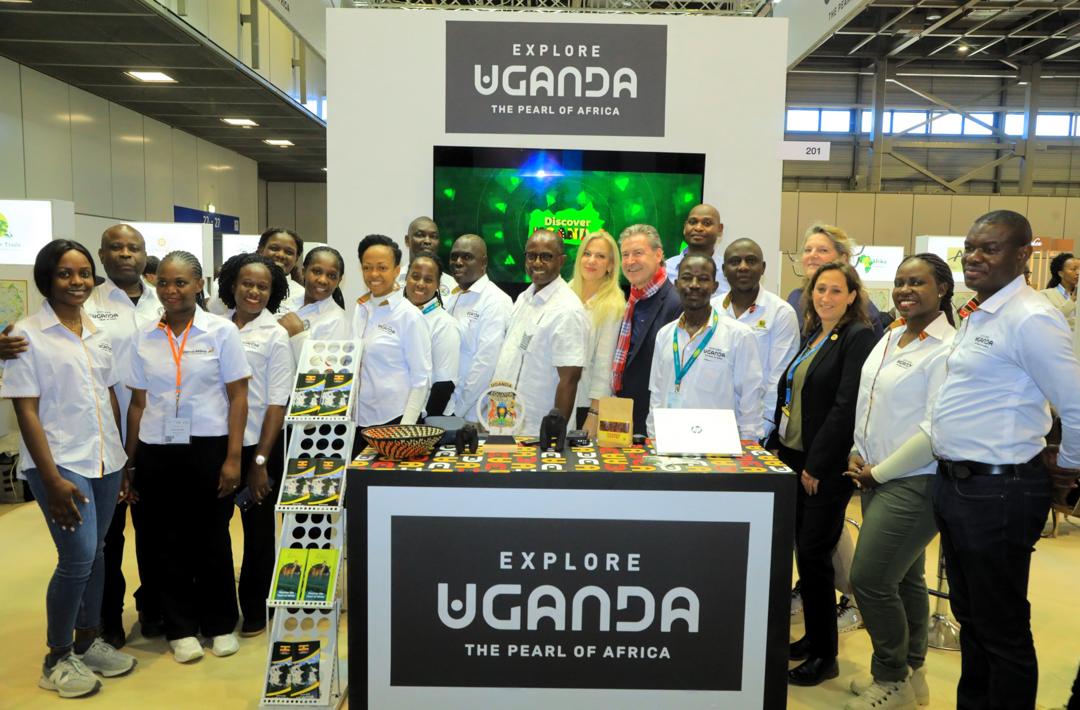
Berlin, Germany—1st March, 2026. The Uganda Tourism Board (UTB), leading the national delegation at ITB Berlin, is spotlighting Uganda’s remarkable wildlife conservation achievements, with a strong focus on the recovery of the white rhino population and the sustained growth of its globally significant primate species.
Once extinct in the wild in Uganda, the white rhino has made a steady comeback through structured breeding programs, strengthened protection measures, and sustained conservation investment. This milestone reflects Uganda’s long-term commitment to restoring biodiversity and leveraging tourism as a driver of conservation financing.
Uganda is home to more than half of the world’s remaining mountain gorillas in Bwindi Impenetrable National Park and thriving chimpanzee populations in Kibale National Park. Through regulated trekking permits, strict conservation protocols, and structured community revenue-sharing frameworks, Uganda has demonstrated that tourism can successfully support species recovery while uplifting surrounding communities.
At ITB Berlin, Uganda is presenting its integrated wildlife conservation model built on tourism-financed protection, community partnerships, and sustainable buffer zone management. Revenue generated from park entry fees, gorilla and chimpanzee permits, and safari tourism is reinvested into protected area management, habitat restoration, and anti-poaching operations. At the same time, local communities benefit through livelihood programs, tourism enterprise participation, and direct revenue-sharing arrangements.
Juliana Kagwa, Chief Executive Officer of Uganda Tourism Board, said:
“Uganda’s conservation story is one of resilience and partnership. The recovery of the White Rhino and the steady growth of our Mountain Gorilla population demonstrate that when tourism is responsibly managed, it becomes a powerful force for conservation and community transformation. At ITB Berlin, we are proud to showcase Uganda not only as a bucket-list destination, but as a country where every visitor directly contributes to protecting wildlife and empowering communities.”
Executive Director of the Uganda Wildlife Authority, Dr. Musinguzi James, emphasized the conservation impact of tourism revenue:
“The restoration of the White Rhino population and the protection of our primates are the result of sustained conservation investment supported significantly by tourism income. Tourism provides critical funding for ranger deployment, habitat management, and community engagement. Our integrated approach ensures that wildlife protection and local livelihoods go hand in hand.”
The Commissioner of Tourism at the Ministry of Tourism, Wildlife and Antiquities, Lyazi Vivian, underscored the government’s policy commitment:
“Uganda’s tourism strategy is anchored in sustainability and inclusive growth. Our policies prioritize conservation, climate resilience, and community benefit-sharing. The success stories we are presenting at ITB Berlin reflect deliberate government efforts to align tourism development with biodiversity protection and socio-economic empowerment.”
Uganda’s integrated model is structured around three key pillars: tourism-financed conservation, structured community partnerships, and effective buffer zone management to reduce human-wildlife conflict and safeguard fragile ecosystems. This framework has strengthened community ownership of conservation and reinforced Uganda’s position as a leading sustainable tourism destination in Africa.
As global travelers increasingly seek responsible, conservation-driven experiences, Uganda stands out as a destination where tourism directly funds wildlife protection and community development.
The Uganda delegation at ITB Berlin invites international media, tour operators, and investors to engage with its team to learn more about Uganda’s conservation success stories and sustainable tourism opportunities.
End
amoxicillin 500mg
amoxicillin 500mg
lisinopril 20 mg
lisinopril 20 mg
stromectol tablets canada
stromectol tablets canada